Confident Sensing at the Edge: Private, Real-Time Vision

Today we dive into Edge AI for presence detection and fully on‑premises computer vision, showing how organizations can unlock instant awareness without shipping a single pixel to the cloud. Expect practical architecture patterns, privacy‑saving tricks, and field‑tested insights that prove high accuracy, low latency, and strict data control can happily coexist. Join us, share your questions, and help shape a more respectful, responsive, and secure generation of computer vision systems.

Why On‑Premises Vision Matters Now

Enterprises and communities need immediate, trustworthy awareness in spaces where privacy, compliance, and resilience are nonnegotiable. Fully on‑premises processing keeps sensitive imagery local, cutting exposure while delivering split‑second decisions. When networks falter or policies tighten, operations continue smoothly. You gain predictable costs, consistent latency, and control over every update. Readers who manage facilities, healthcare, industrial cells, or classrooms will discover how these benefits translate into calmer operations, safer environments, and fewer surprises during audits or outages.

System Architecture from Sensor to Insight

Great results begin with thoughtful end‑to‑end design. Cameras, depth sensors, or thermal imagers feed compact, optimized models that run on specialized accelerators. A secure message bus carries only minimal events, not full frames. Operators observe health dashboards, roll out updates safely, and retain evidence policies aligned with legal requirements. This architecture treats privacy as a first‑class constraint, not an afterthought. Explore trade‑offs, ask for reference diagrams, and adapt patterns to your space without sacrificing control or accuracy under real‑world constraints.

Cameras, Depth, and Thermal Inputs

Different spaces demand different eyes. Low‑light corridors benefit from thermal, crowded lobbies from wide‑angle RGB, and safety zones from depth to better understand proximity. Multi‑sensor fusion reduces false positives, especially when reflections, screens, or posters confuse detectors. Even simple steps—proper placement, lens selection, and controlled illumination—dramatically boost performance. Share your floor plans and constraints, and our readers can suggest proven layouts that balance coverage and respect, minimizing blind spots without capturing more detail than your policy comfortably allows.

On‑Device Models and Accelerators

CPUs alone may struggle under real‑time loads, so lightweight detectors leverage NPUs, GPUs, VPUs, or FPGAs. Quantized networks shrink memory, while zero‑copy pipelines avoid bottlenecks. Selecting frameworks with stable runtimes prevents dependency headaches. We recommend building reproducible containers, pinning versions, and testing across representative datasets. Curious which accelerator suits your thermal envelope or power budget? Bring your constraints, and our community will compare options, share thermal measurements, and highlight which toolchains simplify updates without forcing risky, downtime‑prone overhauls.

Designing Presence Detection That Respects People
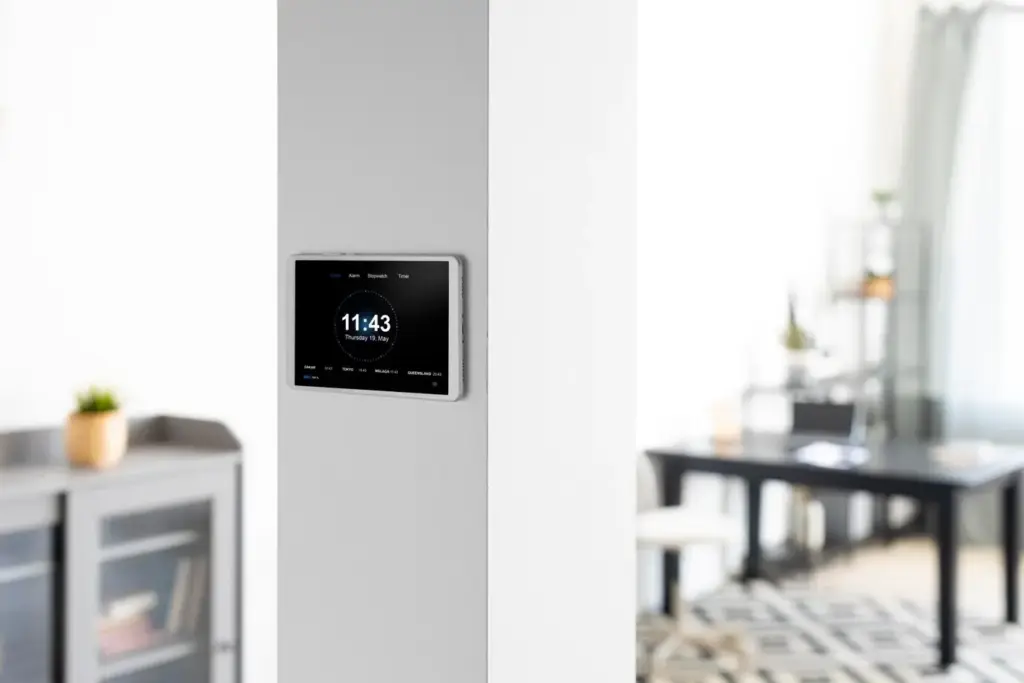
Presence detection should enable comfort and safety without feeling intrusive. Focus on minimal data retention, event‑level outputs, and clear signage that explains purpose and controls. Favor models that avoid identity, prioritizing silhouettes or body keypoints over facial attributes. Align policies with community expectations and offer opt‑out paths where feasible. Invite feedback early, hold pilots in diverse conditions, and treat privacy incidents as learning opportunities. When people feel informed and respected, adoption accelerates and projects endure with cooperative trust.

Model Choices and Optimization

Presence can be detected using lightweight detectors, keypoint estimators, or motion‑aware background modeling. The right choice depends on scene dynamics, occlusions, and power budgets. Optimize with quantization, pruning, and knowledge distillation while preserving recall. Validate on realistic footage with varied camera positions and lighting. Measure end‑to‑end latency, not just inference time. If you are balancing tiny accelerators against crowded scenes, ask for comparative benchmarks; we will compile results that translate jargon into practical trade‑offs you can deploy with confidence.

Detectors versus Keypoint Models

Object detectors excel at rapid localization, while keypoint models offer nuanced understanding of posture, proximity, and movement. For simple occupancy, detectors may suffice; for safety zones and ergonomic alerts, keypoints shine. Hybrid pipelines can trigger keypoints only when detectors activate, conserving compute. Evaluate both under occlusion, mirror glare, and partial views. Try scenarios with seated users, carts, and signage. Share your confusion matrices and we will help interpret misclassifications that resemble people but are actually mannequins, posters, or reflections confusing naive models.

Quantization, Pruning, and Distillation

Compression can deliver substantial gains on edge hardware when applied carefully. Start with post‑training quantization, then explore quantization‑aware training to recover accuracy. Prune redundant channels guided by sensitivity analysis. Distill knowledge from a heavyweight teacher into a smaller student tailored to your device. Validate across temperature swings and voltage variance, because timing margins shrink at the edge. Swap layers only if toolchains support stable kernels. When you hit a cliff, share traces so we can suggest targeted improvements grounded in repeatable experiments.

Deployment Stories from the Field

Tangible stories reveal what diagrams hide. Teams learned that a slightly lowered camera reduced glare that fooled detectors for weeks. Another discovered that a nightly cleaning robot triggered endless false alarms until a simple schedule offset restored calm. In each case, respectful communication with occupants preserved trust. Share your triumphs and missteps so others can avoid avoidable pain. Real deployments reward humility, careful measurement, and the courage to iterate publicly when assumptions meet the stubborn facts of lived environments.

Measuring Success and Iterating Safely

True success combines accuracy, fairness, and user acceptance. Track precision, recall, and latency together with privacy incidents, operator overrides, and community sentiment. Run shadow mode before enforcement, gather annotations, and tune thresholds transparently. Roll out gradually, document changes, and celebrate improvements that reduce nuisance alerts while preserving safety. Invite feedback prominently in dashboards and signage; people closest to the space notice issues first. When metrics disagree, host a review, revisit assumptions, and update your playbook so learning compounds across teams.
Fapuvulefafufatafukevi
Privacy Overview

This website uses cookies so that we can provide you with the best user experience possible. Cookie information is stored in your browser and performs functions such as recognising you when you return to our website and helping our team to understand which sections of the website you find most interesting and useful.